RIS / worklist
Look at the clock.
First-case delays. Gaps between patients. Positioning that takes longer than planned.
Delayed starts · Extended room time · Lost schedule capacity

KyphoLift® Solutions From the Point of Care.
Shaped by patient & clinician needs.

Improve your imaging workflow
Support the patient. Standardize the position. Keep the workflow moving.

Position once. Hold throughout.
Designed to fit your workflow, not change it. Same scanner. Same room. Same patient. Different positioning workflow.
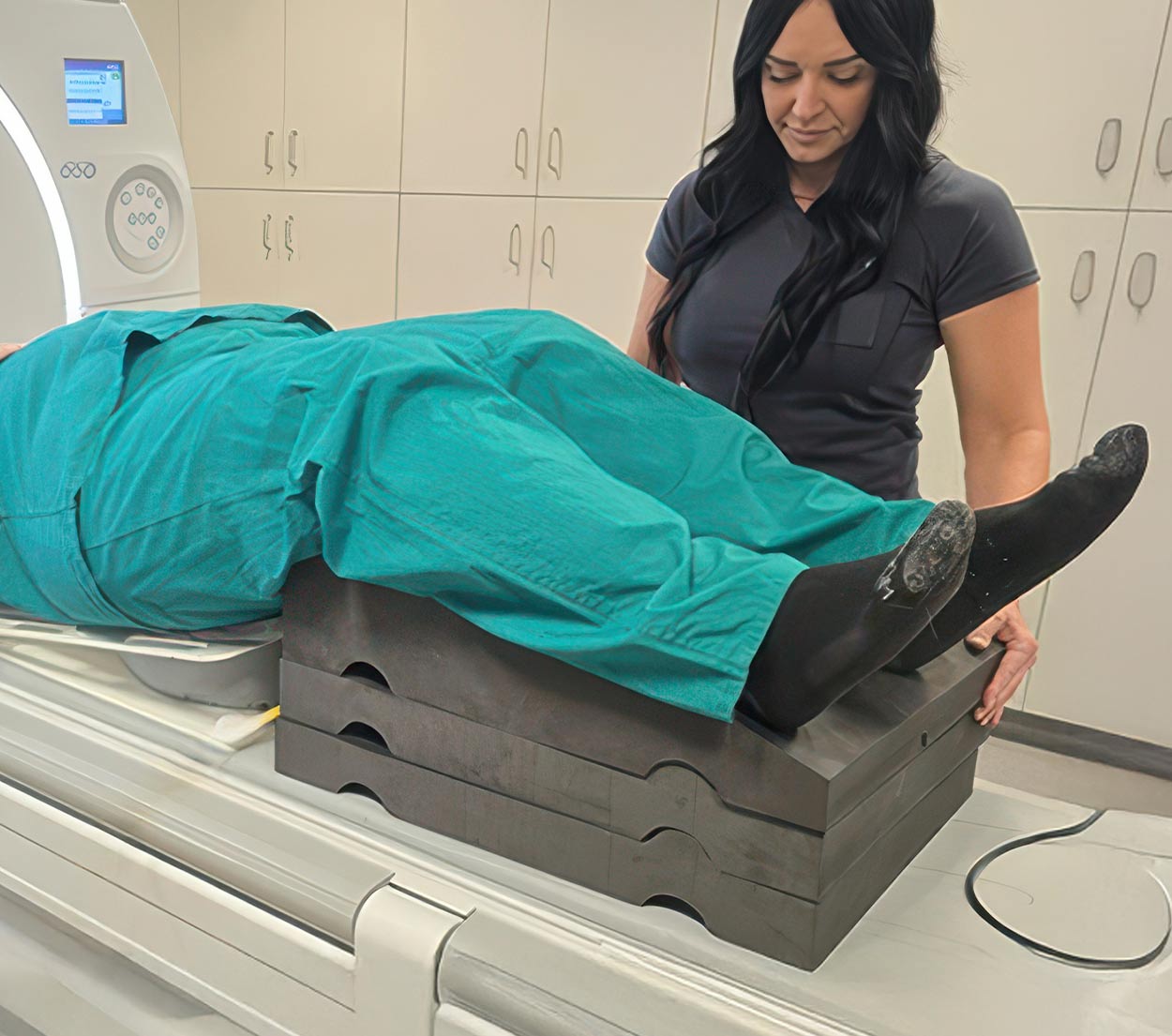
MRI patient positioning does not end at the table. Post-transfer positioning in Zone IV still needs a load-bearing in-bore hold so the angle you set is the angle you keep. That is Safe Patient Handling in MRI (SPHM in MRI) extended past transfer: a single-technologist workflow that protects technologist safety without calling a lift team.
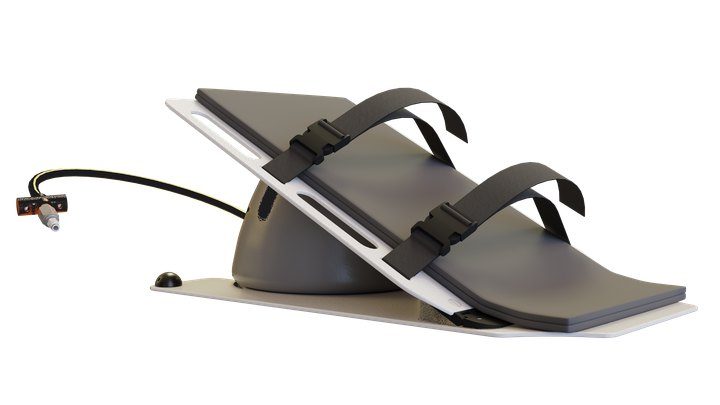
 Patented · U.S. Patent No. 12,758,455.
Load-bearing patient support in Zone IV. No lift through the exam.
See KyphoLift®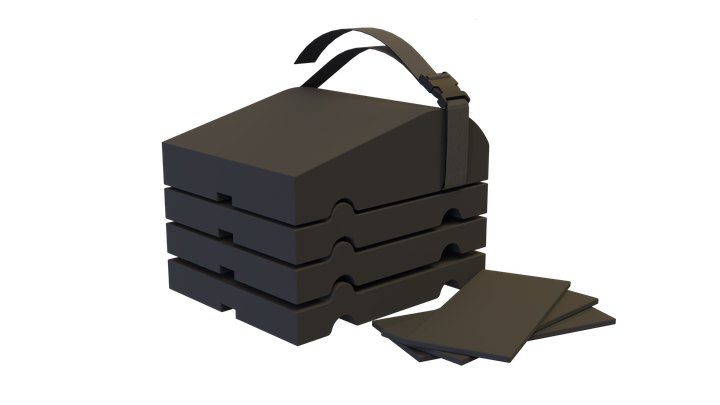
 Patent pending
Height-adjustable interlocking pads. Holds the position you set.
See KyphoWedge®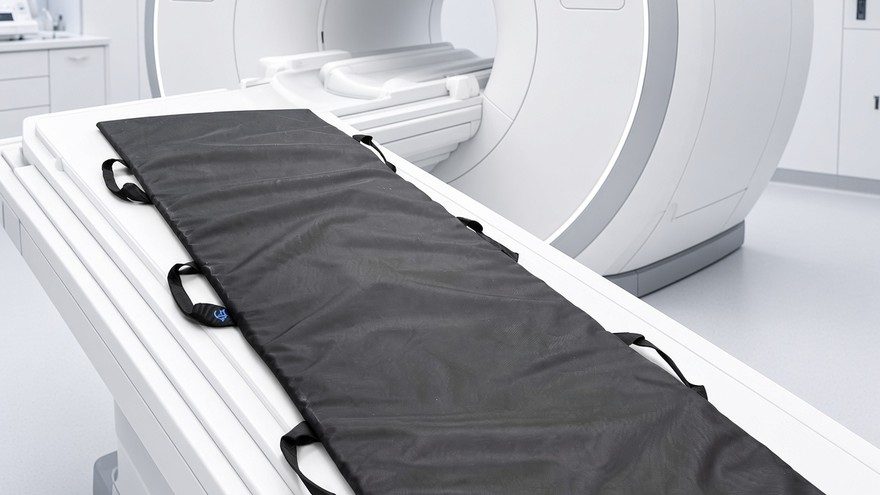

Transfer pad. Six handles. Into the room, not a second lift.
See Gleiter™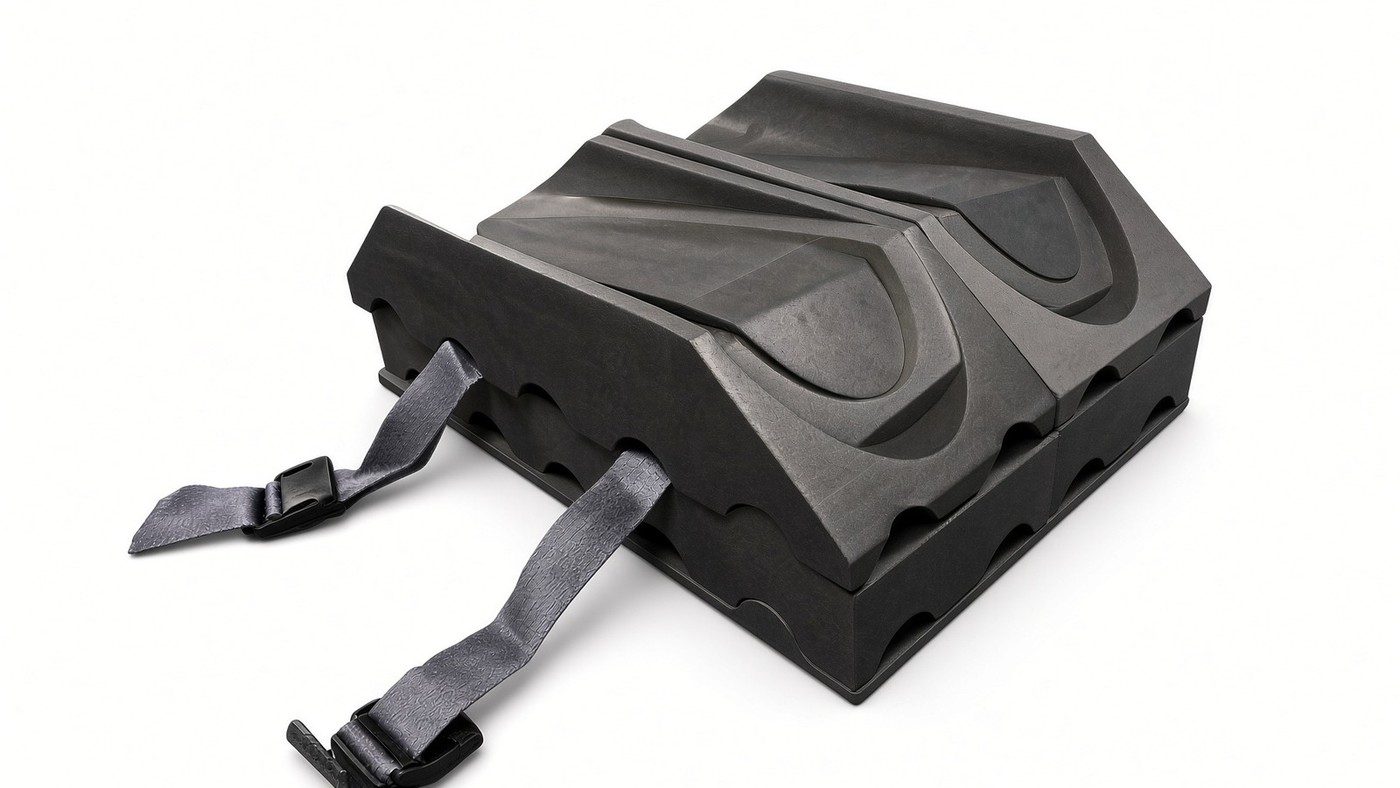 Coming soon
 Patent pending
One set. More ways to position.
See FlexSpace™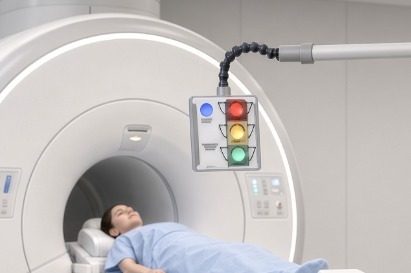 Coming soon
 Patent pending
Visual breath-hold cues inside the bore.
See MRI-Cue™
Why Now?
Changing times. Changing paradigms.
Patient positioning is no longer a variable healthcare systems can afford to absorb.
See why it mattersThe cost no one schedules
The impact is already in your numbers. The workflow just doesn’t label it “positioning.”
Four places it already shows up.
RIS / worklist
Look at the clock.
First-case delays. Gaps between patients. Positioning that takes longer than planned.
Delayed starts · Extended room time · Lost schedule capacity
PACS / report
Look at the language.
“Motion.” “Limited.” “Repositioned.” “Unable to tolerate.”
Motion artifact · Repeat sequences · Compromised exams
Workforce / staffing
Look at the capacity.
Extra hands. On-call assistance. Workarounds. Physical strain that goes undocumented.
Staff capacity · Injury exposure · Workforce fatigue
Schedule / access
Look at what isn't getting through.
Rescheduled cases. Cancellations. Incomplete exams. Patients who cannot be imaged as planned.
Lost capacity · Rescheduled cases · Incomplete exams
For your role
Same problem. Different priorities.
Imaging Directors
17.4%
MRI vacancy, 17.4%, an all time high. 28.7% of sites report outpatient MRI waits over 15 days. Same 30-/45-minute boxes. Fewer people to run them.
Get complex positioning off the critical path.
MRI Technologists
35 lb
NIOSH limit for a lift. Not a hold.
On-call. Short-staffed shifts still expect the scan to happen. Responsibility without the right tools isn’t safe.
Enable safe, single-technologist positioning.
Radiologists
Incomplete scans. Sub-optimal coil selection. Non-diagnostic studies. The positioning problem can show up in the report before it shows up in a KPI.
Positioning that holds. Imaging that aligns.
Risk & Safety
26.2
per 1,000 FTE (CDC)
26.2 per 1,000 FTE (CDC). Patient handling injuries among radiology technologists. More training doesn’t remove the lift under the patient. Engineered controls do.
Extend safe patient handling into Zone IV.
Administrators
$100k+
per year, per scanner. Control the variable.
Motion artifact alone can cost more than $100k per scanner each year, before vacancy premiums, two technologist workflows & patients who never become completed exams.
Turn MRI capacity into patient capacity.

From the field
KyphoLift cut scan delays, boosting throughput and saving costs we didn’t realize we were losing.
KyphoLift eliminates risky lifts, keeping techs safe and patients comfortable—a win for all.
KyphoLift lets one tech handle setups effortlessly—a lifesaver in short-staffed shifts.
Patients with special needs get equitable scans without stress—KyphoLift makes advocacy real.
No more makeshift pillows—KyphoLift ensures smoother scans and happier patients.
Training on KyphoLift was quick—new techs picked it up in a day and love it.
The KyphoWedge pads hold positions perfectly—no more mid-scan adjustments.
We knew the struggle of positioning complex patients—KyphoLift eliminated delays we couldn’t afford.
Manual setups were a constant hurdle—KyphoLift delivers reliable positioning every time.
KyphoLift feels designed by techs who get our daily challenges.
Built by people who understand MRI’s real pain points.
One call showed us how KyphoLift saves time and money.
Our techs rely on KyphoLift daily—it’s transformed complex positioning, saving time and stress.
KyphoLift system makes complex cases simple and safe for our team.
The KyphoWedge ensures perfect positioning every time—a game-changer for our scans.
No more risky lifts—KyphoLift makes safety first.
KyphoLift is a practical solution that technologists actually needed.
1 / 17
The Stories Behind the Scan.
Every day, some patients leave an MRI appointment without the images they came for. Others leave with a partially completed, limited, or nondiagnostic exam.
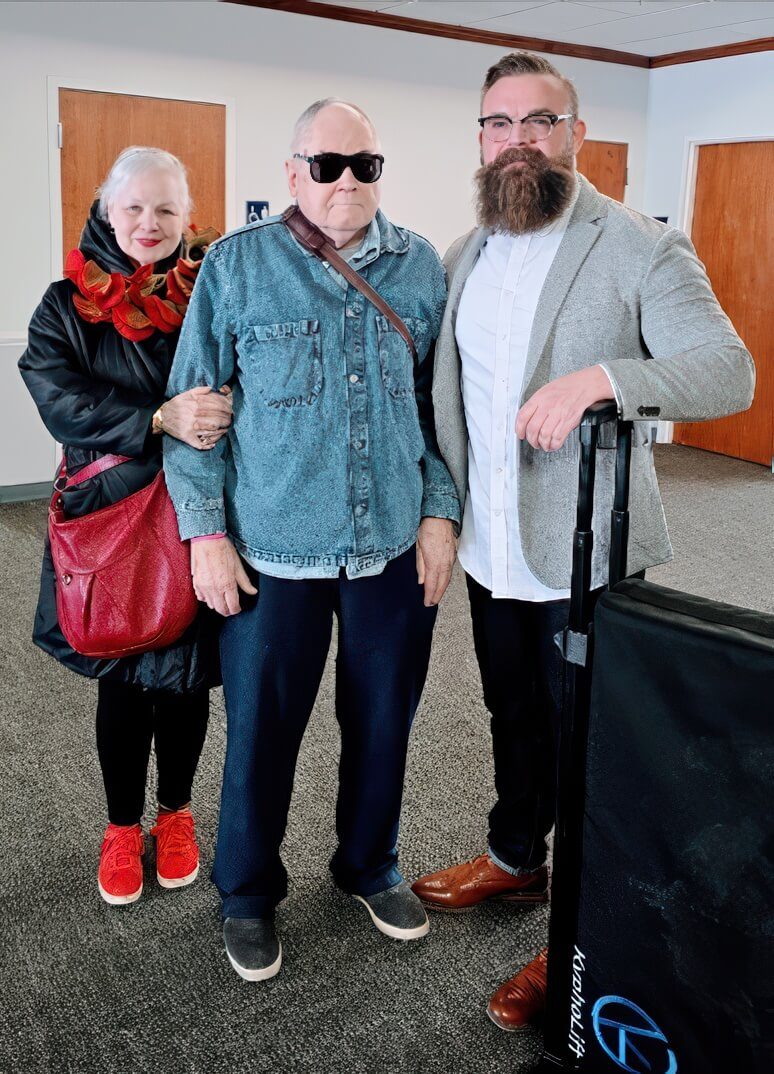
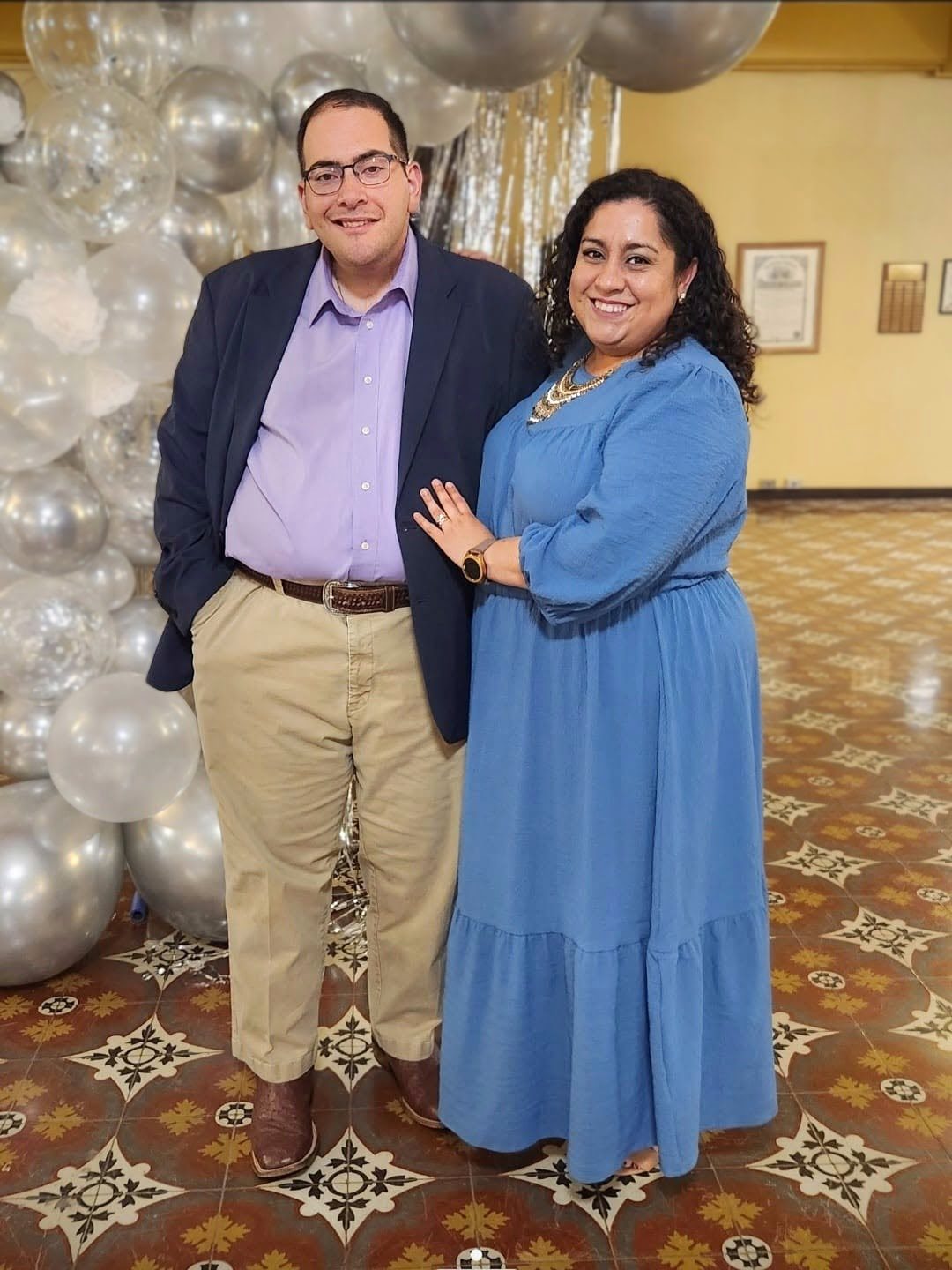
Some reached out to us after they ran out of options. They, & sometimes their families, kept looking for a way forward.
Some patients cannot lie flat for MRI. Kyphosis MRI positioning & bariatric MRI positioning are access barriers, not rare exceptions. Patient access to imaging & continuity of care start with a completed exam.
Is your MRI prepared for every patient who counts on you? These stories are individual. The challenge is not.
They shouldn’t have had to.
But they did.
Here’s who kept looking.
Next step
Vendor-agnostic. No installation. No extensive training. No consumables. No scanner downtime. Tell us about your MRI workflow. We’ll help you find the right configuration & a model that fits your volume.