

Safety & efficiency, standardized
The Room Is Engineered.The Patient Isn't.
MRI workflow is built for consistency: timed appointments, defined protocols, optimized sequences.
Patient positioning in Zone IV still isn't.
For many patients, positioning is straightforward. For others, it takes extra people, stacked pads, & repeated adjustments, creating a position that can shift while the scan is running.
KyphoLift® makes positioning as reliable as the rest of the room.
One technologist. No lift team. No improvised setup.
Lift, position, & hold the patient throughout the exam.
Bring Safe Patient Handling into Zone IV.
Give your team a safer way to position patients. Complete more exams.
KyphoLift® is post-transfer patient positioning: Zone IV load-bearing in-bore support after the patient is already on the table. Built for MRI for patients who cannot lie flat, including kyphosis MRI positioning & bariatric MRI positioning, without treating the device as kyphosis-only.
One-technologist workflow: lift, position, & hold without a second set of hands. That is a positioning lift, not a transfer lift. It lifts into position on the table & does not transfer the patient onto the table. Technologist safety & MRI safety in the same step.
When stacked foam cannot finish the exam, a stable hold supports patient access to imaging & continuity of care. HHS Section 504 is about access to the examination, not a requirement to buy this device.
- 2026 AHRAInnovation of the Year
- Peer-Reviewed
- SPHMWhitepaper
- PatentedU.S. Patent No. 12,758,455.
- ExtendingAccess to Care
How the hold works
The table doesn’t lift. The bladder does.
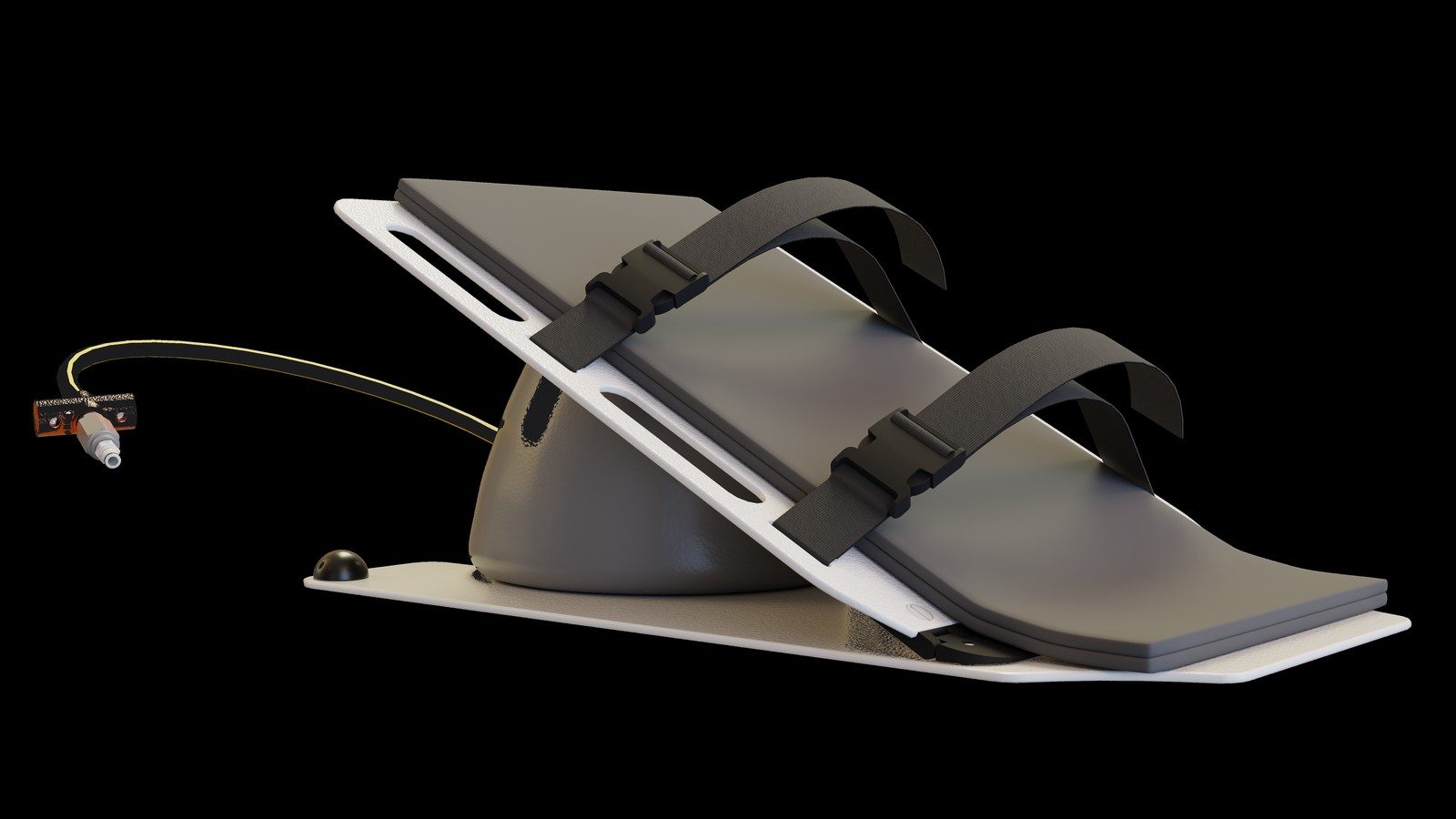
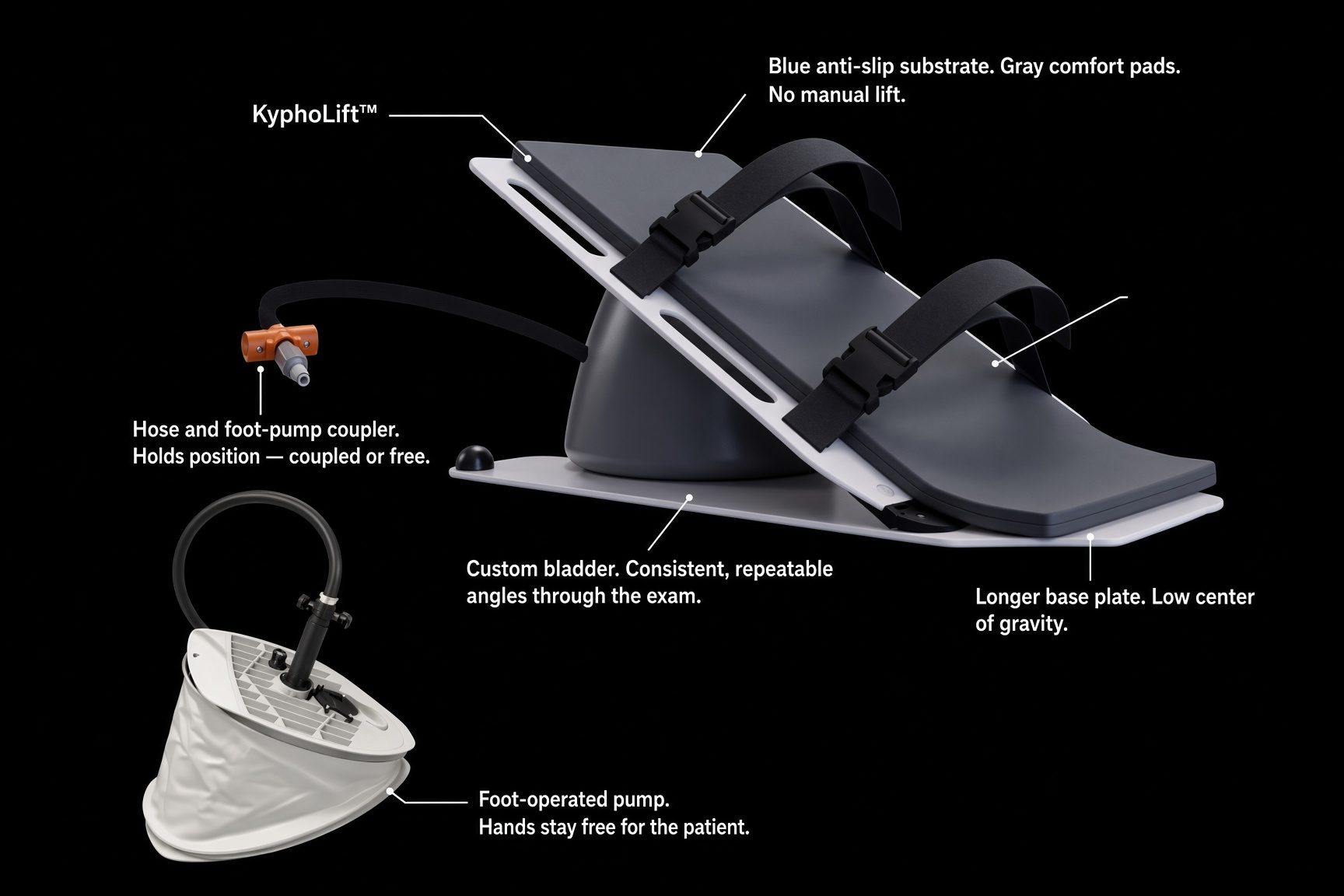
KyphoLift® sits on the scanner table you already have. A long base keeps the center of gravity low. A custom bladder under the pad inflates from a foot pump, the patient rises on a stable plane instead of being hoisted onto foam. Straps & an anti-slip substrate keep coil-to-anatomy where you set it. Disconnect the hose before the scan; the angle holds, coupled or free, through the exam. The inclinometer documents it.
Inflate
Foot pump. Hands stay with the patient. Measurable elevation, not a stack of laundry.
Hold
Load-bearing bladder. Disconnect hoses. The position does not decompress mid-sequence.
Document
Inclinometer. Same angle for the next series, the next contrast, the next tech.
No manual lifting
The hold stays. The second set of hands does not have to.
Load-bearing through the exam
Pneumatic support holds the angle from first sequence to last.
MR Conditional up to 3.0T
Not MR Safe. Carrying case & foot pump stay outside 200 gauss.
Fits the magnet you run
Vendor-agnostic. No installation. No scanner downtime.
How to set up
Same table. Same room. Different hold.
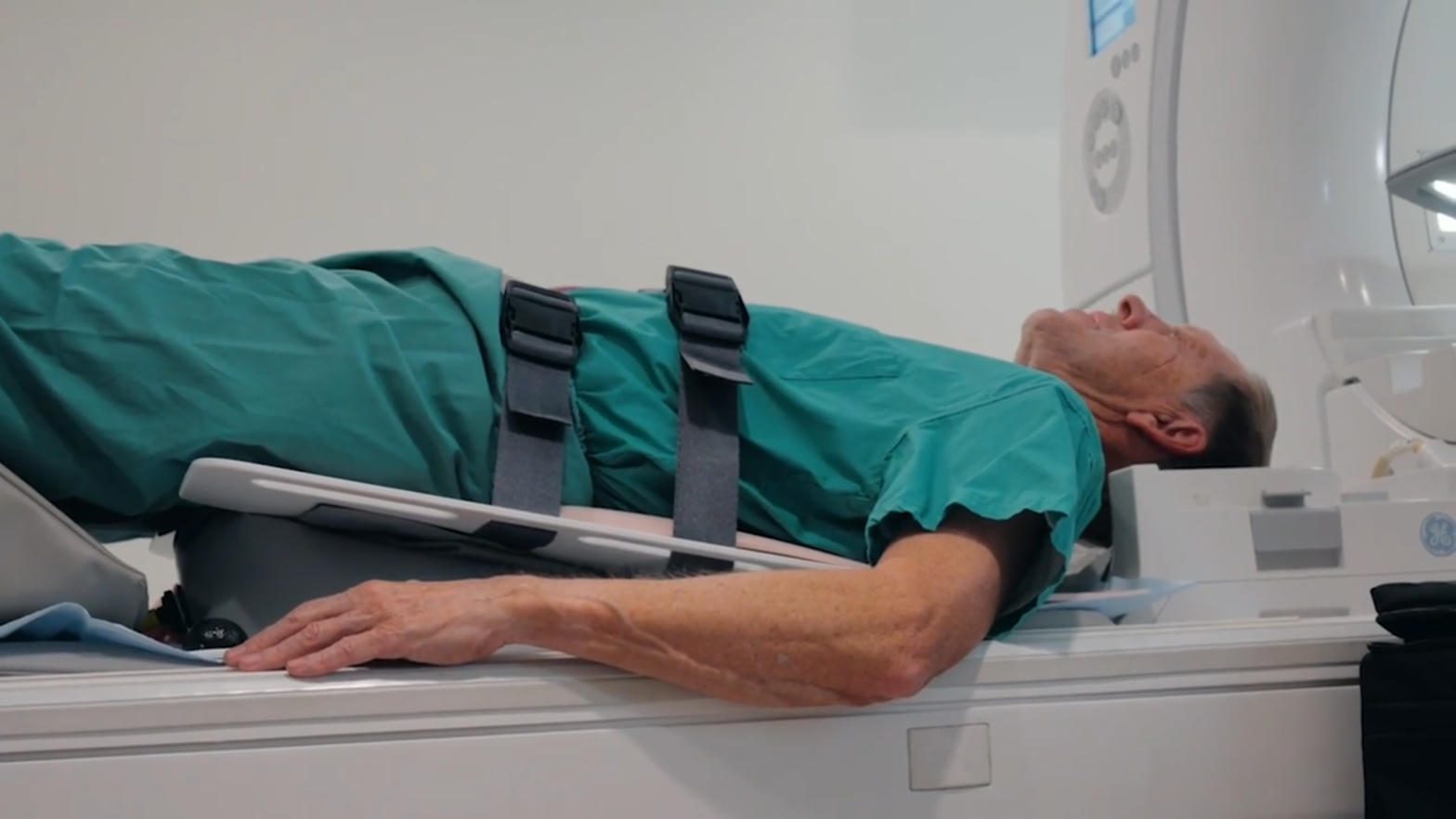
Best placed before the patient arrives for head & neck work. Gleiter™ is the transfer onto that surface. KyphoLift® is still the elevation.
- 01Place the unit on the scanner table with the hinged portion against the head or neck coil, before the patient arrives when you can.
- 02Inspect the bladder & surface. Do not use the unit if damage is present.
- 03Connect the foot pump with the quick-connect hoses.
- 04Position the gel substrate & comfort pad. Secure the patient with buckle straps.
- 05Inflate until the desired elevation. Measure the angle with the included inclinometer & annotate the exam.
- 06Disconnect hoses before the scan. After the exam, deflate, unbuckle, clean, & store.
What’s in the system
SKU KYP02000. KyphoWedge® sold separately. Patent issued.
- Quick-release hose assembly
- Multi-use pad set of 3
- Quick inflate/deflate pneumatic bladder
- Hands-free foot pump (remain outside 200 gauss)
- Inclinometer
- Blue gel substrate
- Carrying case (MR Conditional 3.0T, remain outside 200 gauss)
- Instructions for use
Specifications
Dealer-listing data. Confirm the current IFU before first clinical use. Not a kyphosis-only device.
| SKU | KYP02000 |
|---|---|
| Manufacturer | KyphoLift |
| Overall length | 33 in |
| Overall width | 21 in |
| Platform | 33 × 21 × 21 in |
| Product weight | 34 lb |
| Weight capacity | 550 lb |
| Bladder | Rubber / polyurethane |
| Bladder volume (inflated) | 0.792 ft³ |
| Reusable pads | (1) 32 × 15.75 × 1 in & (2) 8 × 5 × 1 in, memory foam, PU polyester cover |
| Foam | 31 × 15 × 0.25 in |
| Latex-free | Yes |
| MR status | MR Conditional up to 3.0T, carrying case & foot pump remain outside the 200 gauss line |
| Carrying case / foot pump | Remain outside the 200 gauss line |
| Storage | 10 to 40 °C, relative humidity <70% |
| Operating environment | Designed to be in Zone IV 3T |
| Warranty | 12 months from receipt of the device |
| Country of manufacture | United States (ships from Utah) |
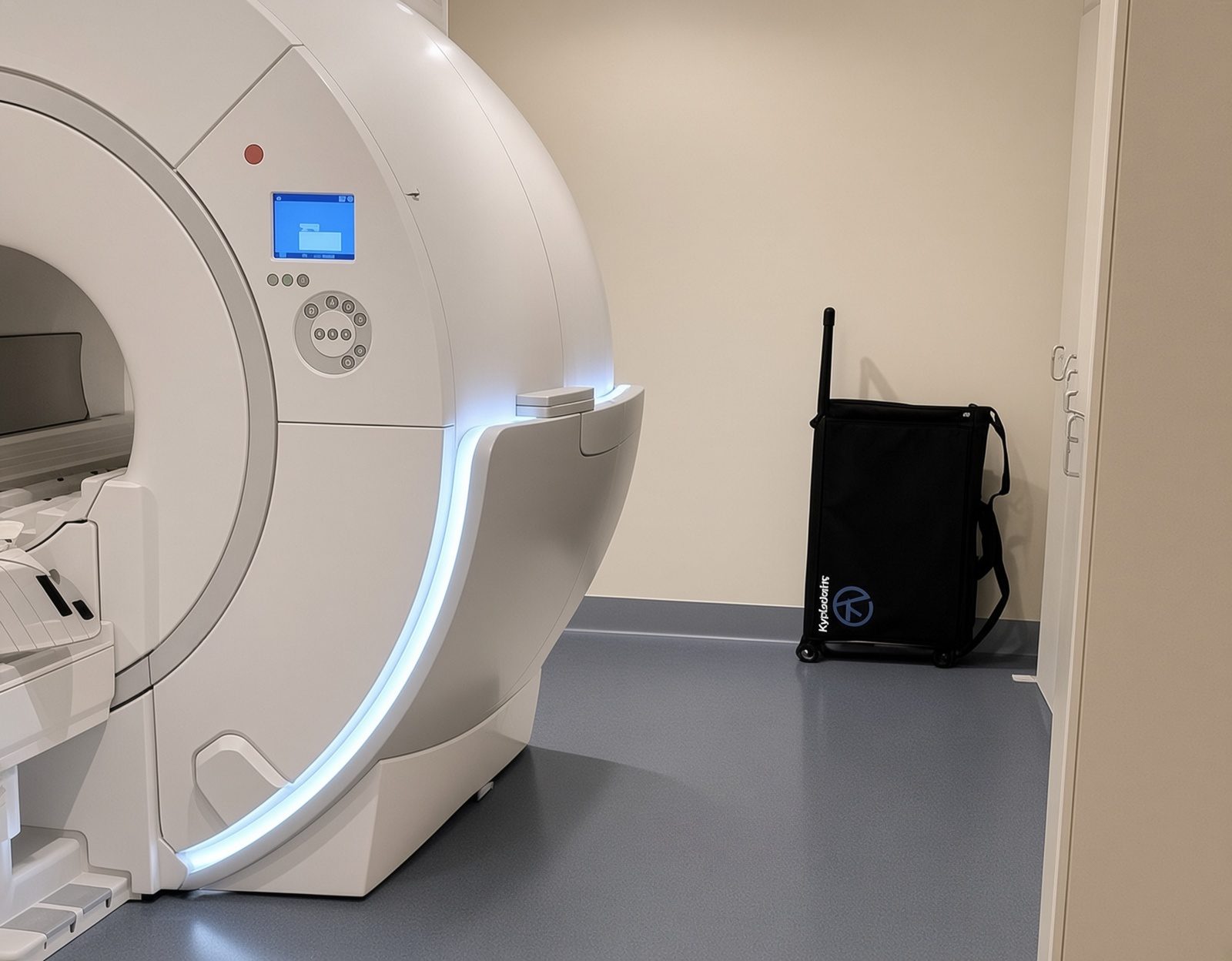
The unit is on the table. The carrying case & foot pump are not. MR Conditional to 3.0T, remain outside the 200 gauss line.
Also from KyphoLift
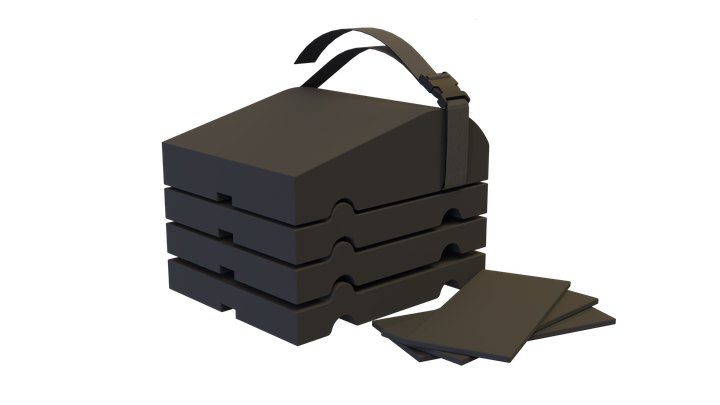

Height-adjustable interlocking pads. Holds the position you set.
See KyphoWedge®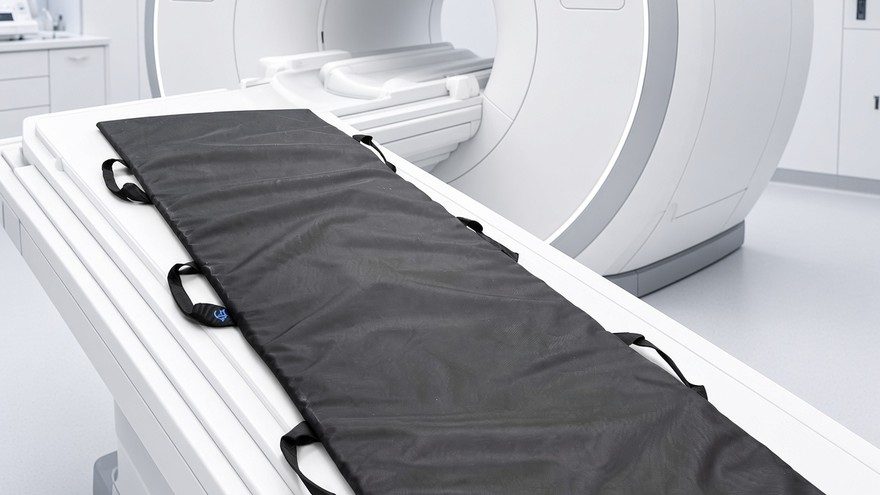

Transfer pad. Six handles. Into the room, not a second lift.
See Gleiter™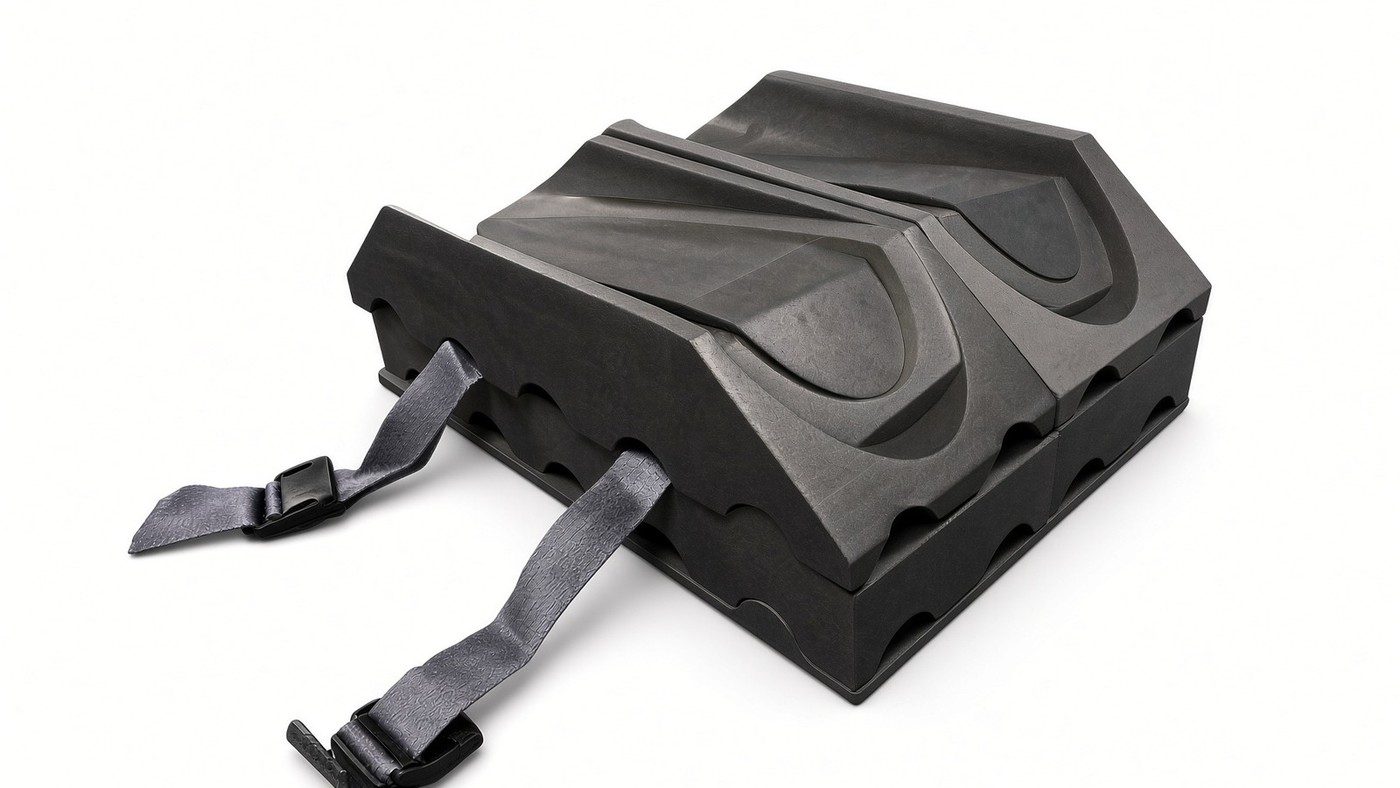

One set. More ways to position.
See FlexSpace™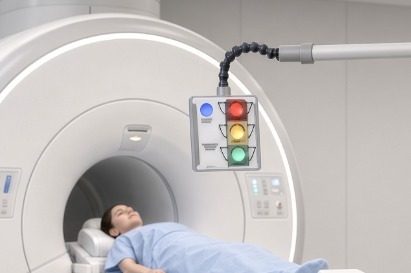

Visual breath-hold cues inside the bore.
See MRI-Cue™Tips & Demos
Built by a tech. Short demos & positioning tips.
See Tips & DemosNext step
Better positioning. Safer patient handling. More efficient MRI.
Vendor-agnostic. No installation. No extensive training. No consumables. No scanner downtime. Tell us about your MRI workflow. We’ll help you find the right configuration & a model that fits your volume.